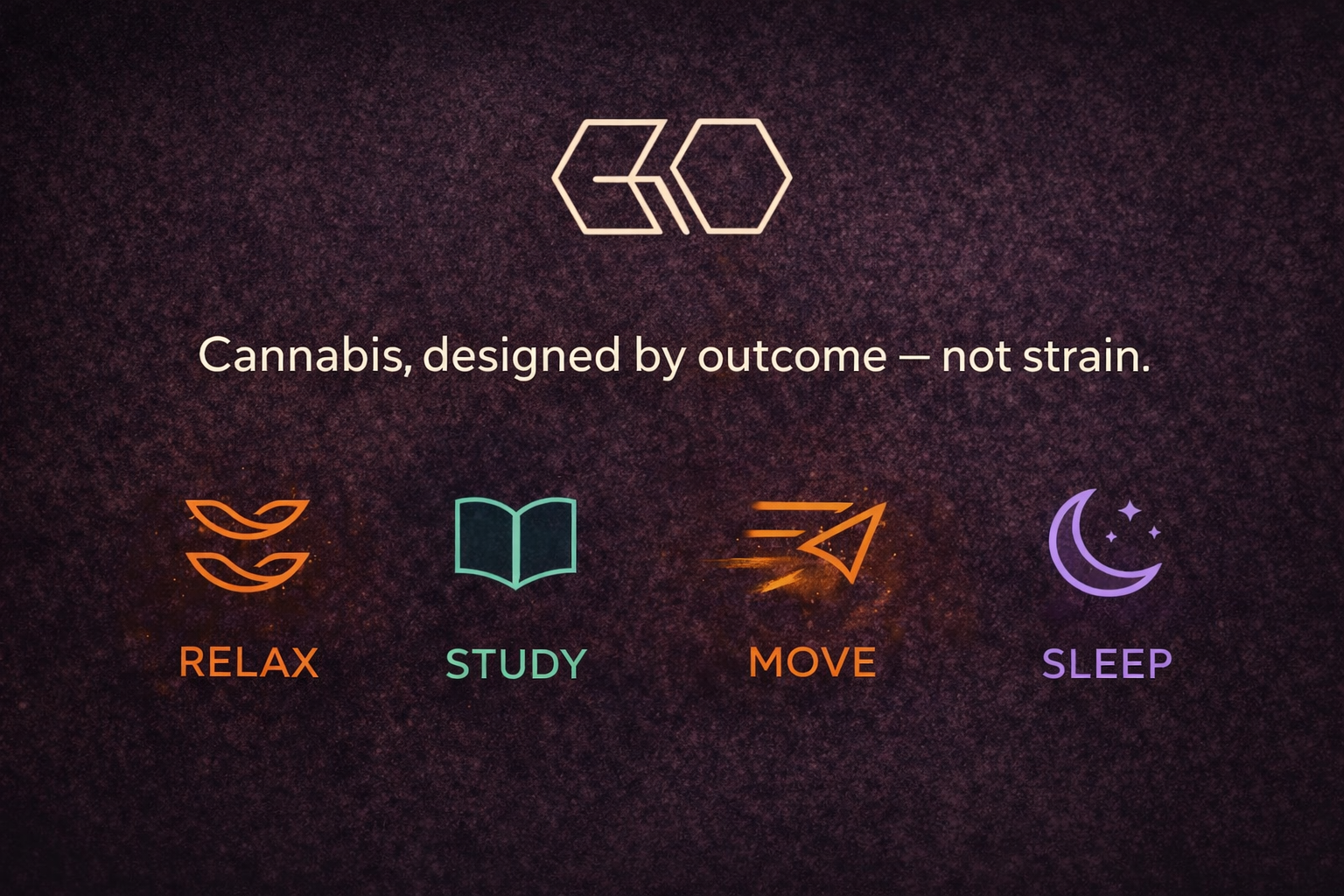
GO — Guided Outcomes™
An outcome-driven system for intentional, useful cannabis products
Important Note
This is not a live product, brand, or commercial offering. GO — Guided Outcomes™ is a thought experiment and strategic exercise exploring how outcome-driven cannabis systems could be designed and applied.
GO demonstrates how branding, UX, and product logic work together to create clarity and usefulness over hype.
What the GO System Is
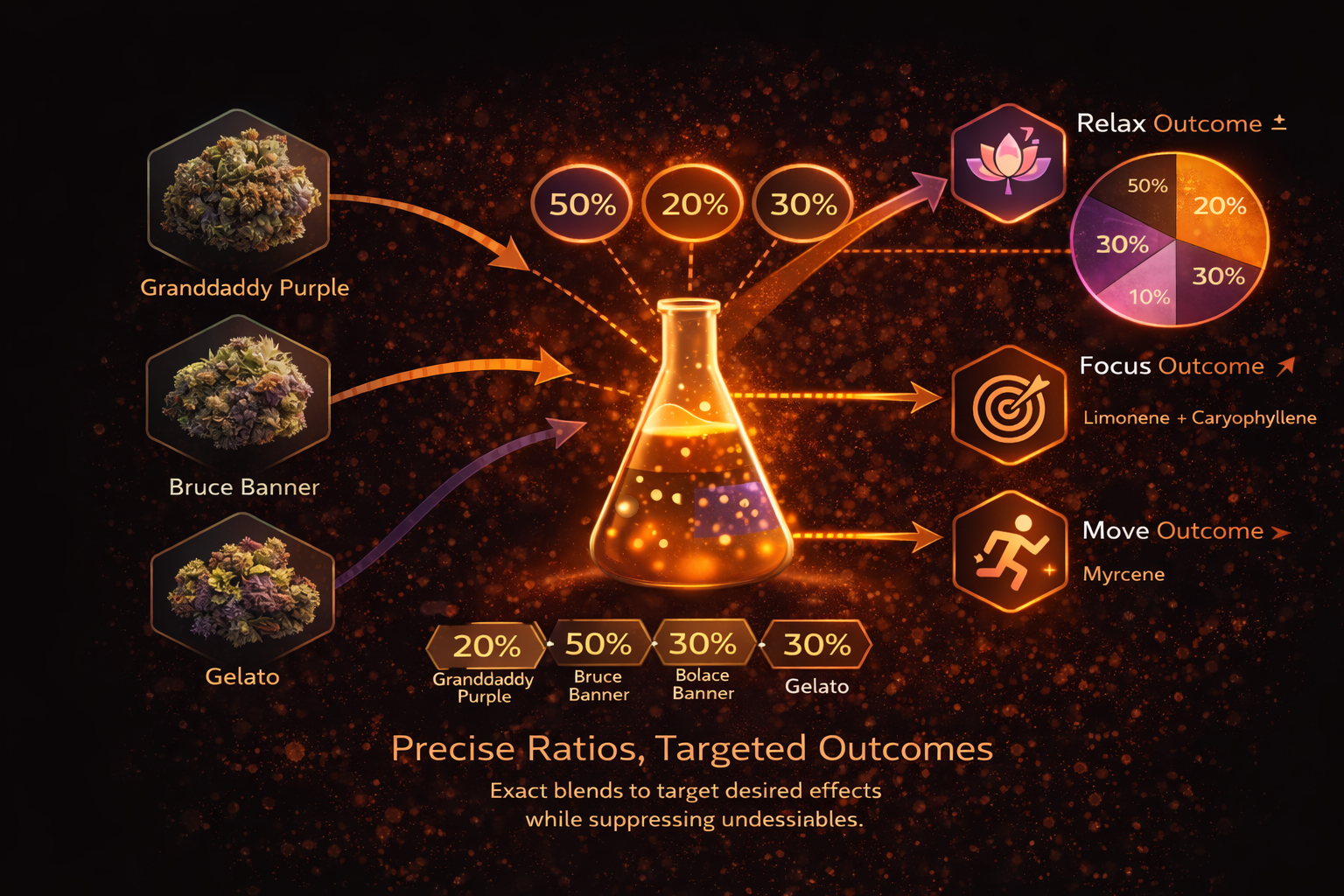
GO is an outcome-driven system. Outcomes are created by combining cultivars based on terpene interactions and ratios.
No additives or artificial terpenes are used. Effects emerge from how naturally occurring compounds interact when specific cultivars are combined in precise proportions.
Formats are flexible—flower, pre-rolls, concentrates—but the outcome logic remains consistent. The proprietary value lies in the decision logic, not in products themselves.
Why This Exists
Outcome branding exists today, but most approaches simply rename single strains. That model is static and fragile—when the strain changes, the promise breaks.
GO designs outcomes intentionally and adaptively. By organizing around what consumers actually want to feel, rather than what strains happen to be available, the system remains stable even as inputs shift.
This approach bridges the gap between consumer expectation and operational reality in early-stage cannabis markets where sourcing is inconsistent.
How the System Works
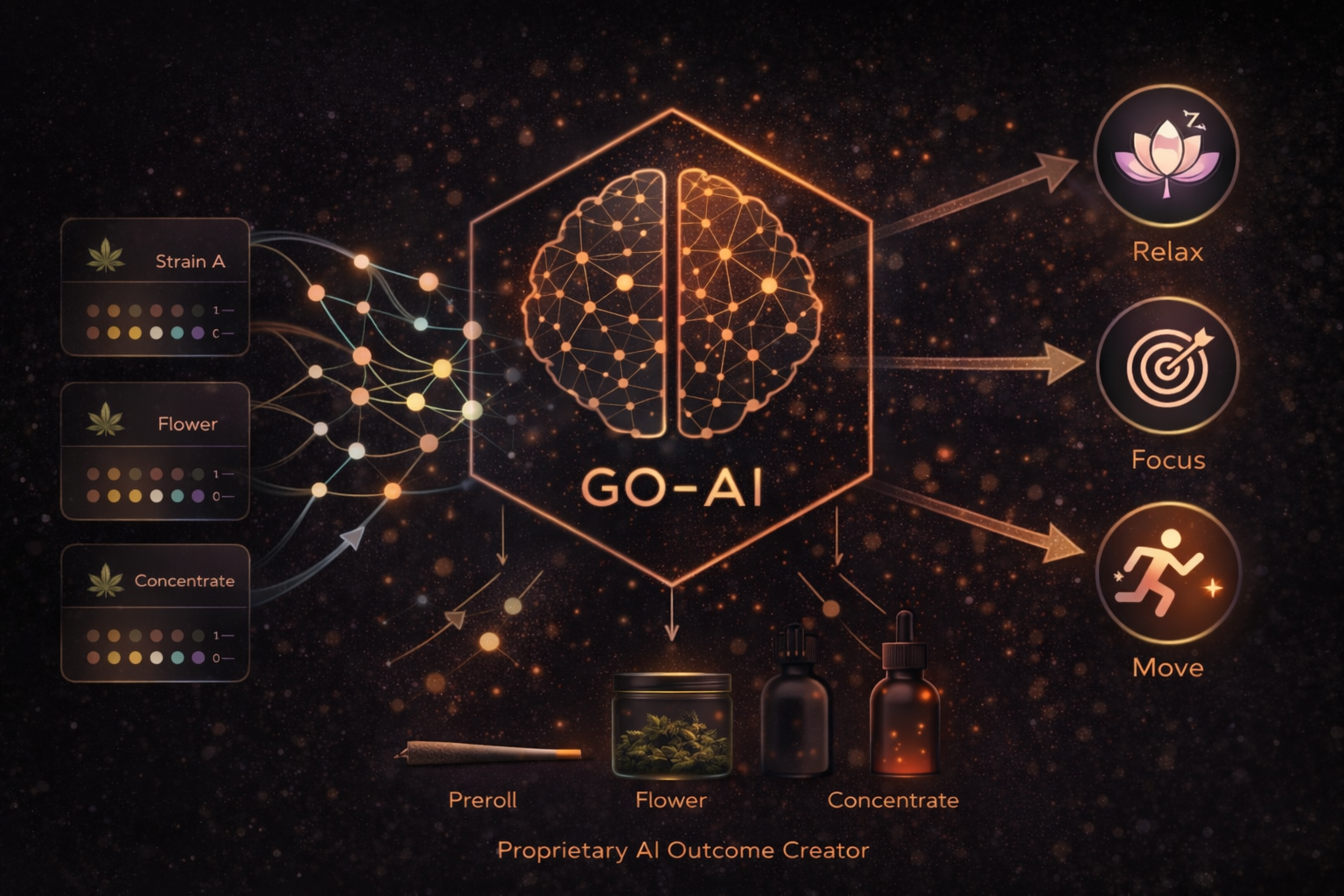
Multiple cultivars are evaluated together — accounting for all terpene interactions and relative ratios — to intentionally arrive at a target outcome.
Cultivars contain many terpenes, not just one or two. Effects emerge from how all terpene interactions play out together.
Ratios matter. The same two cultivars combined in different proportions produce different outcomes. Multiple cultivars may be combined for one outcome.
Managing this complexity requires systematic evaluation of cultivar combinations. Computational tools are used as practical aids to analyze interactions and predict outcomes, not as marketing features.
Flexibility + Customization
Outcomes remain consistent even when inputs change. The system can respond to inventory shifts, operator requests, and dispensary-level needs without breaking consumer trust.
If a specific cultivar becomes unavailable, alternative combinations can achieve the same outcome. The logic is transferable, not locked to specific inputs.
This adaptability makes the system viable for early-stage operations where sourcing is variable and capital is limited.
Outcome Categories

Calming terpene profiles for evening decompression
Focused compositions for deep work and concentration
Energizing profiles for physical activity and recovery
Sedating profiles for sleep onset and wind-down
From System to Product
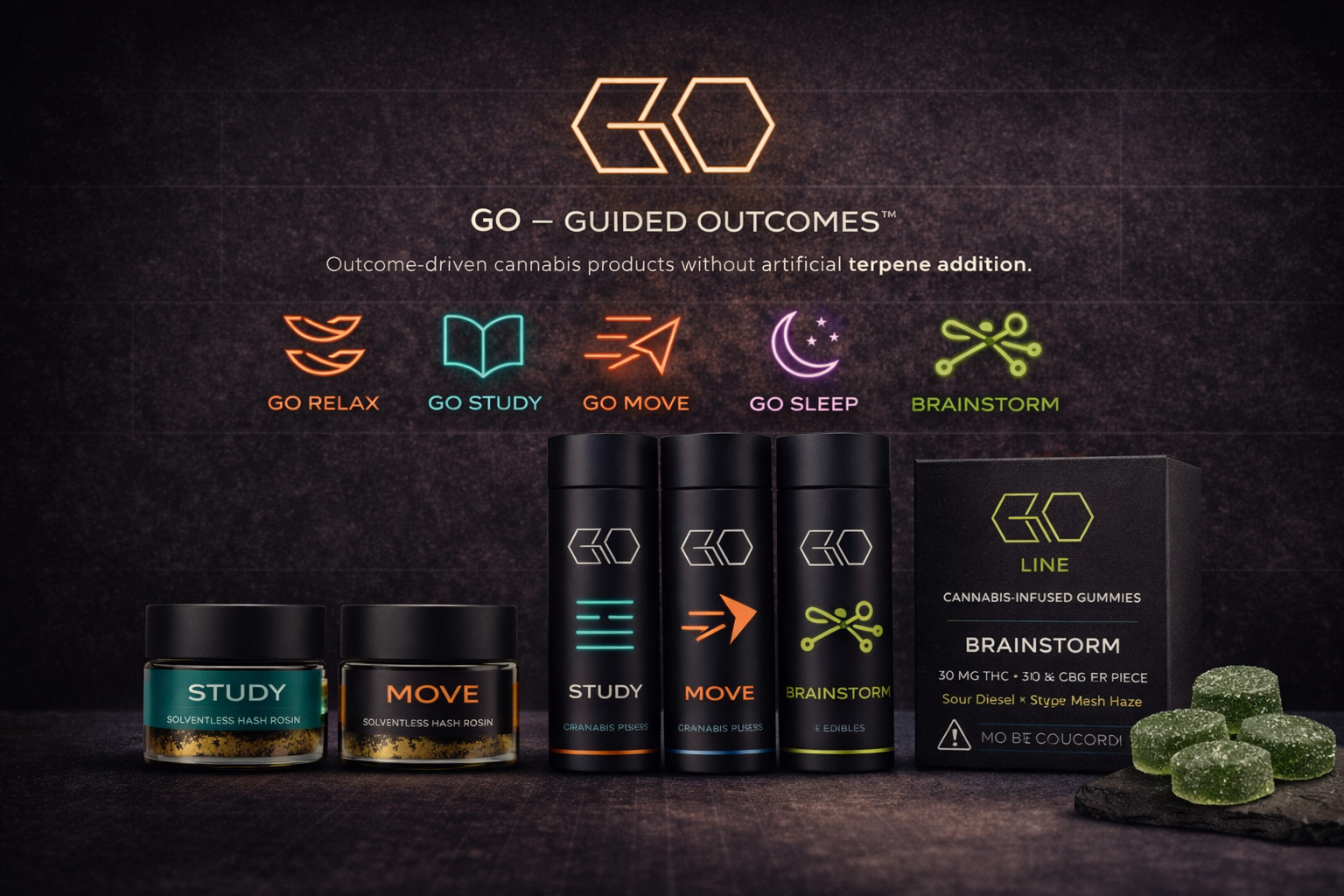
Products shown here are illustrative examples only, not offerings or a fixed SKU strategy.
The emphasis is on usefulness over novelty, and on differentiation even in simple formats like pre-rolls.
Format Design
Physical implementation of outcome logic varies by format. How cultivars are combined—whether evenly blended or intentionally layered—shapes onset, duration, and effect curve.
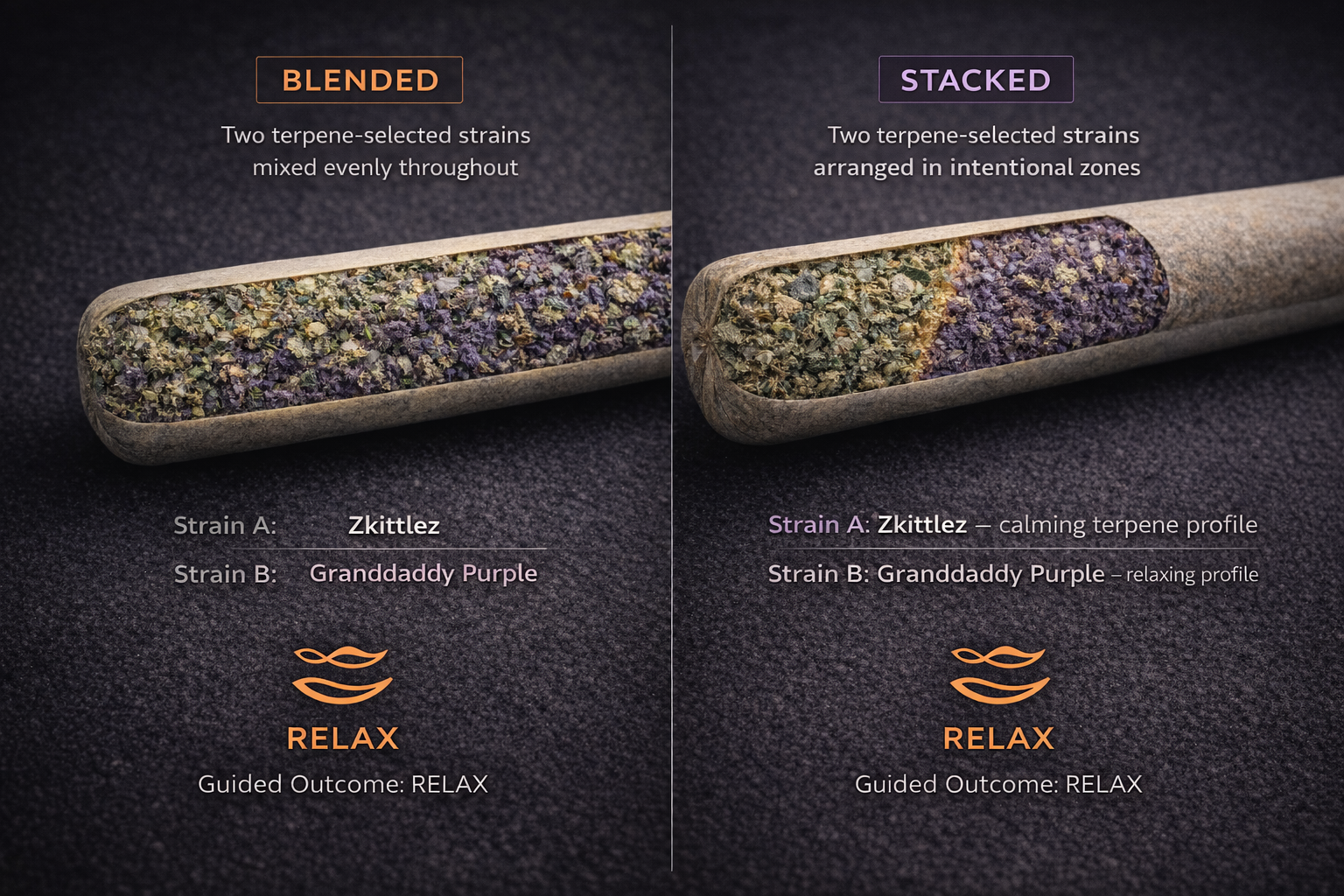
Intentional layering replaces strain mythology with predictable engineering. Effects become reliable through composition logic, not marketing claims.
Branding Strategy — The Long Play
GO is designed for long-term users. After novelty fades, users value clarity, predictability, and trust.
This approach is relevant to mature markets, cannabis tourism, and repeat and wellness-adjacent users who prioritize function over flash.
Branding decisions reflect this: restrained typography, outcome-first language, and reduced cognitive load all support long-term usability rather than short-term attention.
The system ages with the user, remaining useful and trustworthy rather than trying to stay trendy.
Pop-Culture Strains
Strain names matter culturally. GO doesn't erase them, but they don't drive expectations.
The system maintains one foot in pop culture and one in intentional design. Users can reference familiar strain names in conversation while still relying on outcome clarity for purchase decisions.
This acknowledges the cultural reality of cannabis while providing a more reliable interface for actual use.
Typography
Typeface chosen for legibility, neutrality, and trust. Avoids counterculture and novelty cues.
Supports clarity across packaging, digital, and compliance needs. Clear hierarchy favors reading over decoration.
Color & Iconography
Dark backgrounds create calm and suggest longevity. Color is used for differentiation, not noise.
Icons enable fast recognition. Typography prioritizes trust and legibility. The visual system functions as infrastructure, not decoration.
This is not a prescription. It's an example of how complex product and branding problems are approached.
Emphasis on constraints, adaptability, and long-term usefulness over short-term appeal. Systems thinking applied to real operational challenges.